Saturday, 27 May 2017

Bali and back to the UK for a month

Ijen Crater
Green Turtle returning to the sea
Java continued to surprise and delight. After leaving Surabaya we headed back to the south coast where we made our way to the south east corner of the island stopping at two National Parks on the way. The first, Betiri National Park includes Sukamunde Beach, a 5km stretch of sand where on average 6 turtles nest each night. The beach is patrolled by a team of park rangers who collect all the turtle eggs as soon as they are laid and move them to a protected hatchery. between 45 and 60 days later the turtles hatch and they then release them at night, to try and make the process as natural as possible. They have to do this as there is an overpopulation of wild boar and hunting lizards who will dig up and eat the eggs, not to mention local poachers for whom the eggs are a delicacy.
Turtle Hatchlings
Surfing the Wave
Consequently every night 6 rangers patrol the beach between 7.00pm and 4.00am. Despite being very difficult to get to - it requires a 4WD with low ratio - tourists, us included, can join the rangers and watch as the turtles come ashore and lay their eggs. the night we were there 6 turtles came up the beach around 8.00pm, but none laid eggs. All six turtles returned later in the night and six lots of eggs were collected. To build a better understanding the hatchlings from 10% of a nest can be released by tourists in the early morning - around 6.30am (all the others are released at night) so we could see the hatchlings scuttle down the beach to the sea. In daylight they have more predators, and a couple of sea eagles were waiting in the trees behind the beach. It was fantastic to watch the green turtle as she made her way back to the sea, and amazing how large they are. With just flippers to move themselves it takes an enormous effort.
The second National Park - Alas Purwo - is at the south east corner of Java and is noted for two features; first it houses the largest herd of wild Bantung cattle in Indonesia, and secondly it has one of the worlds best surfing waves. The surfers are concentrated in one small area where there are two very exclusive surf camps, again accessed by a very potholed, muddy road, and they tend to stay in the camp. The Banteng cattle roam the other side of the park, grazing on open meadows. In with the banteng there were some deer, and green pea fowl, one which repeatedly displayed to its harem of pea-hens.
Banteng Cattle
On our last couple of days we went to Ijen Crater - famous for its sulphur miners who carry 70kg loads of virtually pure sulphur out of the crater. This is a desolate but beautiful location with a turquoise, and very acidic, lake in the crater and clouds of sulphur vapours emitted from the vents. The amounts of vapour increased in March this year making the downwind side of the crater very unpleasant.
We are now on Bali and after spending a night in the crater of another volcano at the foot of a lava flow from 1968, we have parked our van in the car park of a small hotel, whose owner has been kind enough to let us leave it here while we return to the UK. There will be no more blog postings until July!


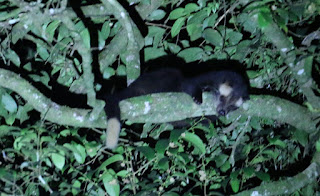
Javan Black Langur

Sulphur Carrier
Displaying green peafowl and three disinterested pea hens


Tuesday, 16 May 2017

Java - and the hunt for Gas

Temple at Jambi
In thinking about Sumatra we don't generally think of old civilisations, but the temple complex at Jambi, constructed in the 10th - 13th centuries demonstrates that there were major conurbations 1000 years ago. The complex of dozens of brick built temples stretches for 7kms along the banks of a river. Each temple complex has a major central building which presumably housed a deity, with four smaller temples arranged round it all bounded by an enclosing rectangular wall. Bricks were used as in this flat part of east Sumatra there is little rock, but plenty of clay. the site is superbly maintained with cut grass and surfaced paths and is well used by locals for picnics and days out with open space to play games etc.
Leaving Sumatra for Java
East Sumatra has little else to detain the visitor so we headed south down the main road to spend a couple of days at Way Kambas National park, home to 200 wild Sumatran elephants and where they are seen relatively often as they invade the farmer's fields. This relatively small reserve is mainly secondary lowland forest with areas of swamp around several rivers. Taking an afternoon river cruise we saw many birds and a large crocodile, but sadly no elephant were at their grazing area.
After 8 fantastic weeks on Sumatra we were sad to leave and were bid farewell by a tremendous thunderstorm which followed us across the straits to Java.
Rock Pools at Krakal Beach
We had been aware that our supplies of LPG which are stored in a built in tank and which we use for cooking were running low so headed for Jakarta where their tuk tuks had been converted to run on gas. After asking at garages with no success a local man offered to escort us, and took us first to the tuk tuk filling station, but they use LNG, then to the LPG filling station, but they only fill bottles. It seems the only place to fill an auto tank with LPG is in Surabaya.
Wave Watching
The north of Java is relatively flat and very developed so we headed to the south coast where many sandy beaches are shown on the map. This area is so different with limestone mountains stretching down to the sea, with beautiful sandy coves. For four days we travelled along the road nearest the coast camping each night by one of the beaches, enjoying watching the waves crash against the rocky headlands and wandering over the rocky foreshores probing rock pools and finding various exotic creatures, sea slugs, sea snakes and many star fish. The south coast roads on Java are so much better then Sumatran roads and the infrastructure somewhat better, though maintenance of paths etc is not a high priority. Parts of the coast are very reminiscent of north Devon with narrow twisting roads to bays with glimpses of blue sea, the main difference is the vegetation, and temperature.
Pelang Beach
With gas our gas tank now registering 1% we have headed back to Surabaya to refill, before we head east along Java to Bali where we are planning to leave the van for a month while we return to the UK for our son's wedding.

Christmas Frigate Bird


well camouflaged Sea Slug


Venemous Blue Lipped Sea Krait (sea snake)

Starfish
 

Waterfall at Pelang beach


Tuesday, 9 May 2017

Back to the Southern Hemisphere


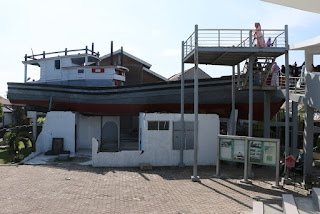
Fishing Boat on roof of House - Banda Aceh
Pulau Weh provided a fantastic break from travelling, but after a week we were back on the main Island of Sumatra. We spent a day visiting the extraordinary sights, one a fishing boat which was stranded on top of a house, and is now a memorial, and a 20,000 ton generator ship which was washed 1.5kms inland. The tsunami museum in Banda Aceh displays some graphic photographs and a video of the tsunami showing how fast and devastating the flood was after the damage already caused by the earthquake. The city has now been rebuilt into an attractive clean modern city.

20,000 ton ship washed 1.5kms inland by the tsunami
Aceh Province in the north of Sumatra is a semi autonomous state run on Sharia Law, but is tolerant of non-muslim tourists and even hosts a number of churches.
North Sumatra, the next province south is mainly Christian, with lots of churches and few mosques. Further south again the communities are mainly muslim, with huge numbers of mosques being built, and almost every village with a road chicane where people wave large fishing nets at you to collect for the mosque building. 

Elephant bath time
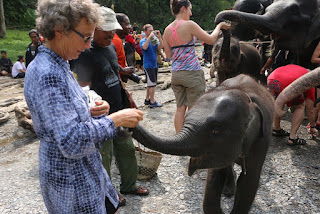
Feeding 18 month old elephant
Our return route has followed the mountains along the western side of Sumatra giving us the opportunity to see some more of the wildlife, including Thomas' Leaf Monkeys. Near Medan we visited an elephant rescue centre, set up by locals who were concerned by the conditions of working elephants, and also by the encroachment of palm oil plantations on the Forest reserve. They take ex working Asian elephants and provide them with a more friendly environment, also using them to patrol parts of the adjacent forest to deter poaching and timber felling. The elephants live as a herd and you can join them for their morning wash in the river, armed with a scrubbing brush and bananas. The herd has three very playful babies aged between 8 and 18 months.
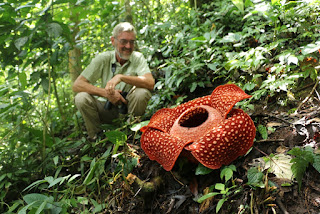

Having re-crossed the equator to the southern hemisphere we called at a small reserve near Bukittinggi where they protect Rafflesia plants (the worlds biggest flower) and were fortunate that one flower had opened that morning. Our guide took us through the beautiful village and after an hour including a scramble up a muddy path we came across the Rafflesia Arnoldii bloom which grows as a parasite on the roots of a creeper. This particular bloom was around 60cms across so only a relatively small specimen of flowers which can reach over 1m in diameter. In the village we had a reviving cup of Lauwak Coffee from a small coffee producer who has set up a home based business using coffee beans retrieved from Civet droppings collected from the jungle by 100 local farmers. She cleans, roasts and grinds the beans in her house and has set up a small cafĂ© where you can try the coffee. She also sells 100g packets for around £12!
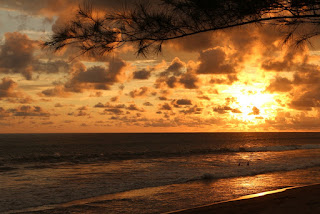

After another night by the ocean with a fantastic sunset, we tried a night drive through Kerinci National Park and did see a palm civet, though no tigers or leopards. and have now crossed to Jambi to visit the hindu temple complex. 
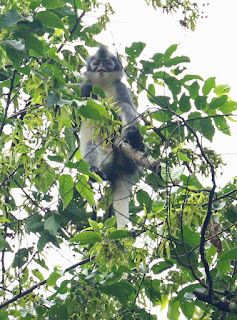
Thomas Leaf Monkey


Palm Civet

Young Pig Tailed Macaque


Monday, 24 April 2017

To the Nothern Tip of Indonesia

Devastation caused by landslide
Leaving Medan we headed back to the mountains and followed the road up through the spine of the country towards Gunung Leuser National Park - a huge area of mountains covered in untouched rain forest. The road follows a beautiful river valley which has been cultivated with the jungle rising up on either side.
Masonry house destroyed by landslide
Approaching one village on the road we met first saw many heavy vehicles and military and police personnel. Entering the village, many people were sitting round in groups talking quietly, and then we saw why. For around 1km the hillside had been washed down through the village, destroying their timber houses, overwhelming bridges and blocking rivers. We had seen images on the TV news a couple of days previously which said 8 people were killed. A massive clean up operation was in progress with diggers, and rescue teams and emergency food stations. It is only when you see the effect directly that you can appreciate the scale and devastation caused to these relatively poor rural communities.
Female wild OrangUtan
Mother with baby OrangUtan
The main road through Gunung Leuser passes through some areas of prime forest, and we were fortunate to see a family of wild OrangUtans feeding on a tree right beside the road. We managed to camp by the river and again saw them feeding in the same tree the following morning along with a pair of the ridiculous Rhinoceros Hornbills.
Gunung Leuser National Park
Rhinoceros Hornbill 
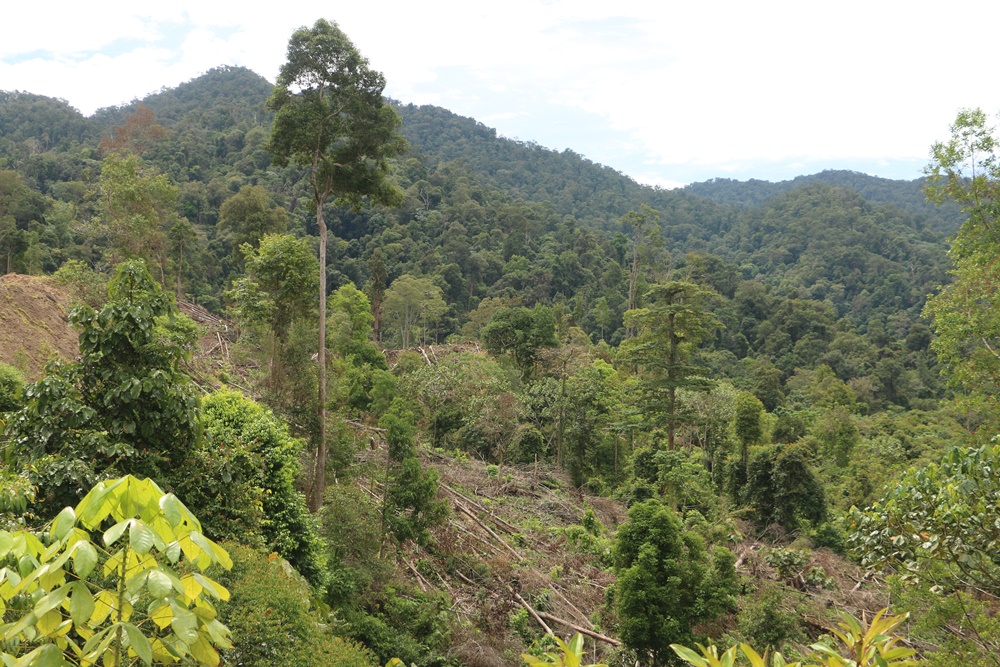
Start of forest clearance
Deciding to cut through to the west coast we followed a minor road which climbed through the untouched forest to 1600m. Sections of the road are in a very poor state and we used the 4WD capability of the Landcruiser a couple of times to overcome very steep and muddy sections.
From the west coast this road is controversially being upgraded, widened and surfaced and it soon becomes clear that where there is easy access the forest is soon cleared for the timber and for agriculture. Poignantly just before we reached the start of the forest clearance we were privileged to spend 3/4 hour watching a family of wild gibbons feeding and displaying their acrobatic abilities in a tree by the road.
Beautiful coast of Aceh Province
White Handed Gibbon
Having reached Aceh Province we were now in the area devastated by the 2004 tsunami and the west coast has many new houses and a fantastic new road which sweeps along the coastal plain to Banda Aceh in the north. This beautiful coastline of palm lined sandy beaches and rocky headlands feels very undeveloped and tranquil. Without stopping to see Banda Aceh we caught the ferry to Pulau Weh where we applied for a visa extension and due to a weekend and public holiday had to stay for a week. A beautiful island containing the northern most point of Indonesia (kilometre 0) with coral gardens and excellent snorkelling just a few metres from the beach provided an ideal place to relax for a few days before we start our journey south.        


Most Northely point of Indonesia 


Pulau Weh Campsite
Sunset from Pulau Weh Campsite

Wednesday, 12 April 2017

Crossing the Equator and Driving inside Volcanoes

The Caldera and Lake Maninjau
Minang Palace
The north of Sumatra has had some of the largest volcanic eruptions in history. In the past week we have driven round the inside of two old caldera, Lake Maninjau near Bukit Tinggi which erupted around 55,000 years ago and left a caldera 30kms by 8kms, now filled with a lake. We spent the night on the rim, then drove down the 44 hairpin bends on the road into the caldera. Once it was a developing tourist destination, but when tourism declined they turned to fish farming, with numerous nets of farmed tilapia. A road runs round the lake under the rim where landslides are a hazard and emergency escape signs and paths have been created. Every possible area of the caldera edges is farmed, the shallower places for rice, and the steeper slopes for vegetables.
Into the Northern Hemisphere
Having explored further the Minang culture with a visit to a traditional village centred round the mosque, a long meeting house, and the kings palace, recently rebuilt after a fire caused by lightening destroyed it in 2007, we headed north to Lake Toba, crossing the equator en route. As we moved into the province of North Sumatra from Central Sumatra there was a sudden change, as all the villages now had one or more Christian churches, and hardly a mosque in sight. North Sumatra also appeared much poorer with the villages frequently comprising of many very small wooden houses, and the minor roads to the villages in a very poor condition, although much work is underway to improve them.
Sumatra Surili Mitered Leaf Monkey
We climbed steadily until the turn off to Lake Toba when we started to drop down a steep cliff with spectacular views into the caldera. Lake Toba is huge - 100kms long by 30kms wide - and was created by the explosion of a supervolcano around 70,000 years ago - believed to be the largest explosive eruption on earth in the last 25 million years. 2,800 cubic kilometres of rock were ejected with the ash from the eruption leaving significant deposits in Lake Malawi in Africa and up to 9m of ash in India! Global temperatures are believed to have dropped by between 3 and 5 degrees Celcius for several years. The centre of the caldera has now flooded creating a huge lake, but uplift of the centre of the caldera has created a large island within the lake. We spent a day driving round the island, passing through lots of villages where the traditional Batak houses dominate and are still a significant part of the community. The caldera seems to create its own weather with clouds hanging over and along the walls and rain storms sweeping across the lake. Waterfalls cascade down the rim walls, which rise 800m from the lake, fed by the regular rain storms. Unlike most of Sumatra the forest on the rim is mainly conifer and there is a lot of natural grassland surrounding the caldera.

Batak Village
Needing to renew our visas we have now dropped down into Medan to visit the immigration office, and we will try and get the wheel bearings greased / replaced as they are running hot, not surprising after the hammering they have taken on the broken tarmac roads here in Indonesia. Once all sorted we are heading to the northern tip at Banda Aceh.


Lake Toba


Brahminy Kite

120m waterfall into lake Toba